

A Practical Framework for Operational Health and AI Readiness
Most leaders don’t ignore the big foundational issues in their business because they don’t care. They ignore them because they don’t realise how deep the problem goes. On any given day, you’re making dozens of decisions. Some are strategic, most are operational, and many are made without the full picture, often in areas that sit outside your strength areas. And when you’re juggling customers, people, cash flow and growth, the things that feel hard to define often slip behind the urgent things that feel easier to fix.
There’s a phrase for this: “eating the frog.” The idea is to tackle the hardest, most uncomfortable task first, because everything else feels lighter once it’s done. In reality, most businesses don’t do this. The difficult, less visible issues get pushed to tomorrow’s list, then next quarter’s, then “sometime this year.” Not because they aren’t important, but because they don’t shout the loudest. Systems still run. People still work around the gaps. The business still moves forward, but inefficiently and without accurate information.
Until one day, it doesn’t feel quite as steady as it used to. This is often where conversations about data, security, and AI readiness start to surface, not with neat initiatives, but with an alarming sense that the foundations are under serious strain.
This article isn’t about adding another project to your already full plate. Think of it as an essential inflection point in the operational health of your business: a way to understand three key forces that subtly determine how stable, secure and adaptable it really is. Tackled together, rather than piecemeal, they make the work lighter, not heavier.
So, in this article, we’ll keep things simple and practical.
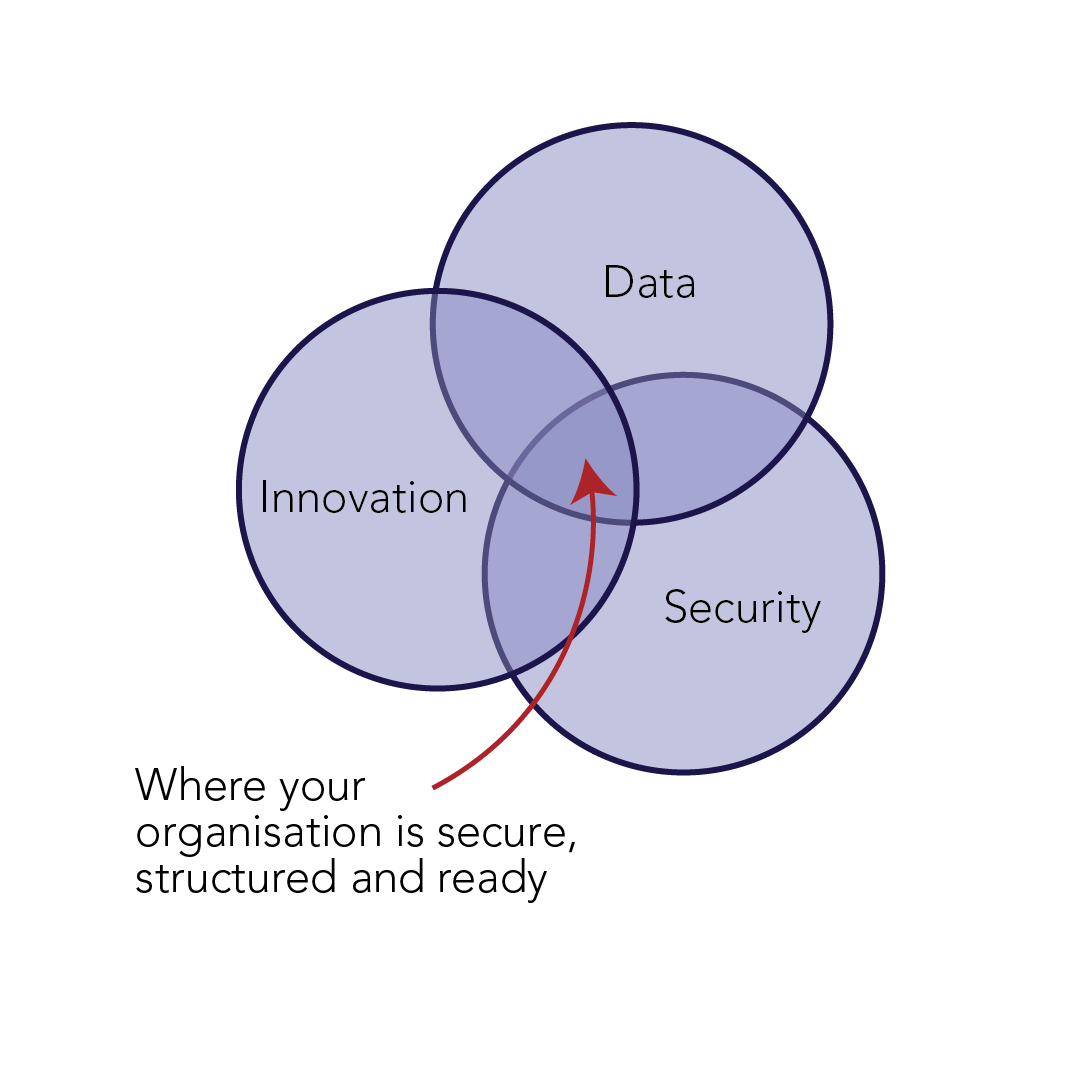
There are three components that are intrinsically linked:
- Your data store or “data lake” (where your business information lives – often Microsoft SharePoint, a proprietary CRM or files and folders on storage systems or devices)
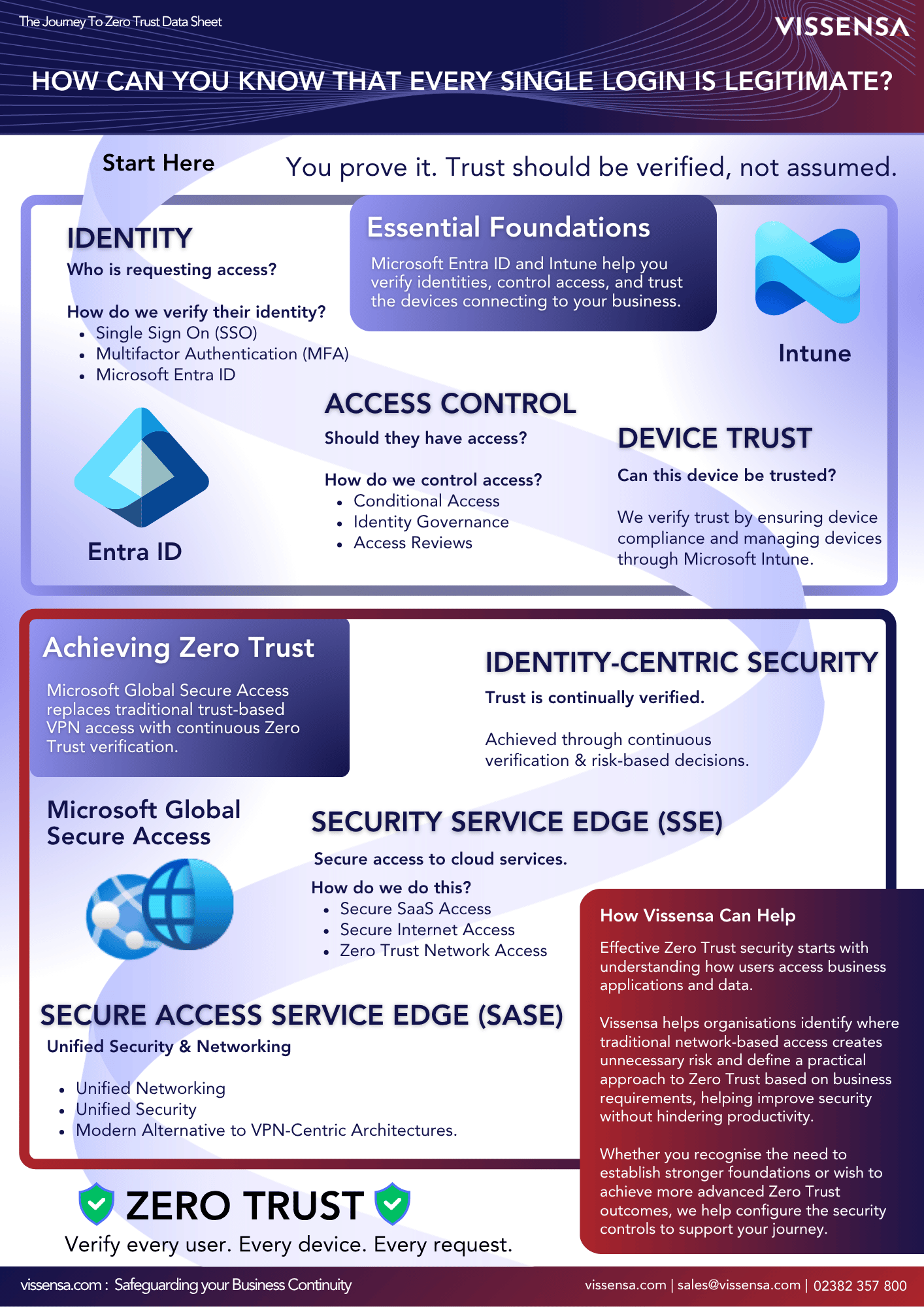
- Your cyber security posture (how access is controlled and risk is reduced – often through Zero Trust and conditional access principles)
- Your AI readiness (whether automation and AI can be safely and usefully applied to real business processes)
Think of these as a power tripod. Strengthen one leg without the others, and balance is lost. Ignore one, and everything above it becomes unstable.

1) The first leg of the tripod:
Your data store and the reality of data sprawl
Every business knows that data matters. Customer information, financial records, contracts, operational documents, and internal knowledge; they’re the lifeblood of the organisation.
As businesses grow, that data naturally spreads. New folders appear. New systems are added. More people create, save, copy and share information in ways that make sense in the moment. But it doesn’t always grow up in a planned way. It just… expands.
How data sprawl begins:
- Documents get stored in multiple places “just in case”
- Customer information is split across emails, Teams, spreadsheets, CRM notes and random folders
- Important files get saved locally on laptops or in personal drives
- No consistent naming, no consistent structure, no consistent ownership
- “We’ll tidy it up later” becomes the default plan
Some organisations hit a point where the sprawl becomes so obvious, and inefficiency so widespread, they’re forced into a big reorganisation project. That’s usually painful, time-consuming, and disruptive. Others simply keep muddling on, with no structure, no policies, and no guardrails around access or change control. And that might feel survivable… until the next two forces enter the picture: security and AI.
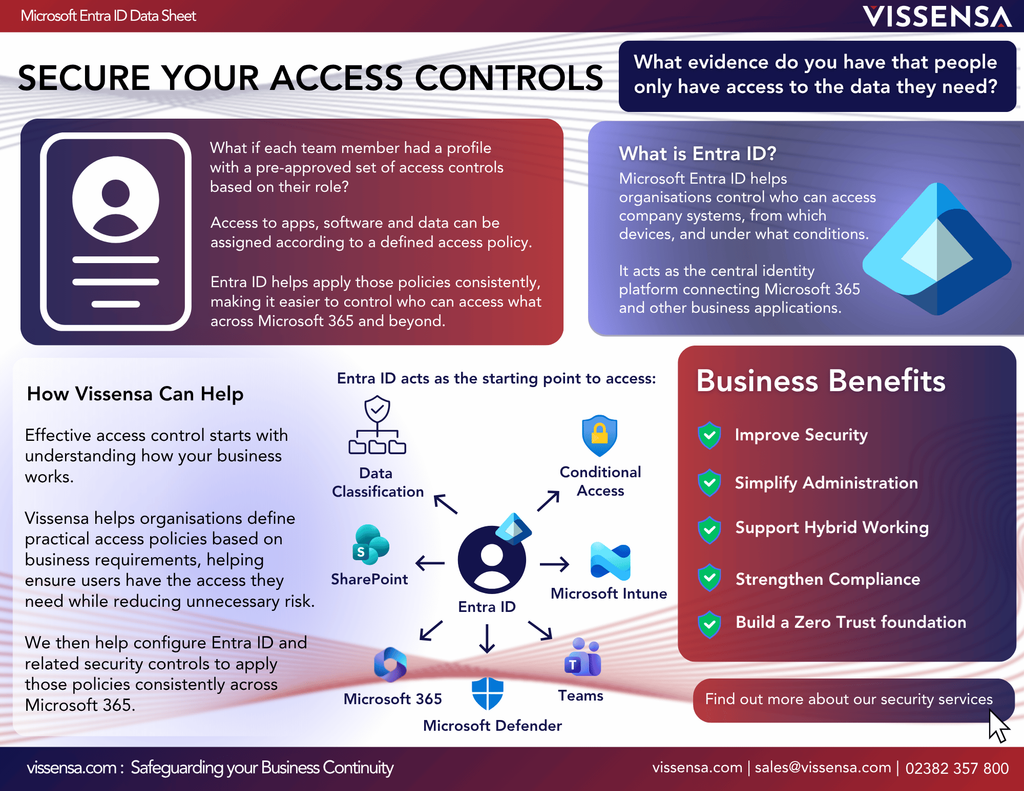
This is why data classification is the true foundation of operational health.
Classification is simply the discipline of understanding:
- what data you hold
- why it exists
- how sensitive it is
- and who should (and should not) have access to it
When a business classifies its data, even at a simple level, it moves from accidental custodianship to intentional control. It becomes possible to design structure, standardise storage, and reduce duplication. More importantly, the organisation gains clarity about which information is critical, which is routine, and which carries risk if mishandled.
2) The second leg: Security posture
(why structure enables control)
Once the first leg of the tripod is properly structured and classified, security stops being a guessing game.
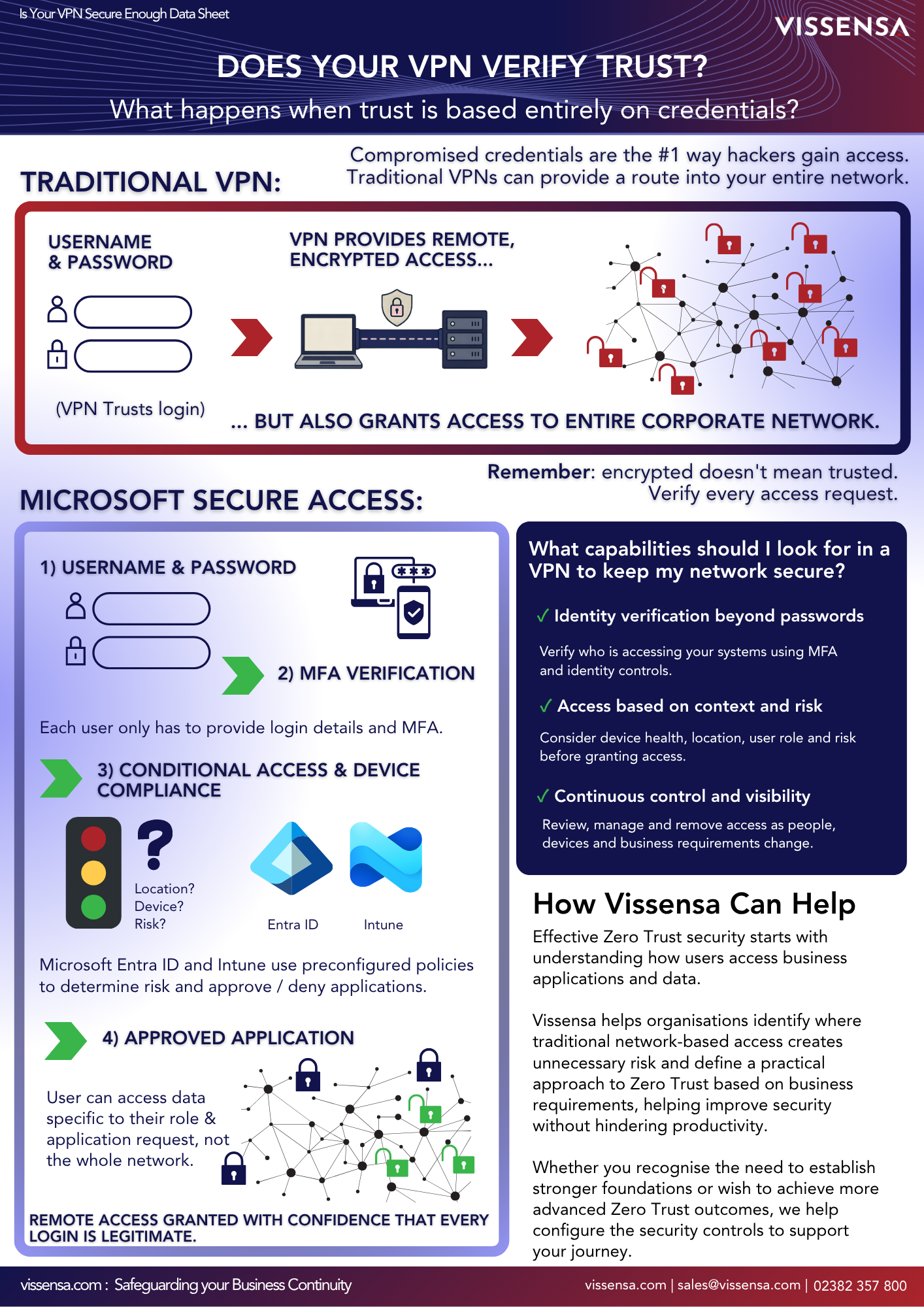
This is where Zero Trust principles can be applied meaningfully. Zero Trust assumes that access should never be implicit. Every request to access data should be verified, authorised, and auditable.
With classified data, it becomes far easier to answer the questions that actually matter:
- Who should have access to what?
- Under what conditions?
- From which devices?
- And with what level of permission?
Access control sits at the boundary between data and security. But cybersecurity goes much further than permissions alone. A resilient security posture is about preparing for the unexpected; not just trying to prevent it. This is where broader cybersecurity measures come into play:
- security awareness training (so people understand risk, not just rules)
- backup strategies that assume failure will happen
- recovery planning that prioritises continuity, not just restoration
- monitoring and response capabilities that detect issues early
- policies that evolve as risk & threats change
Together, these measures shift a business from reactive firefighting to proactive resilience. Instead of asking:
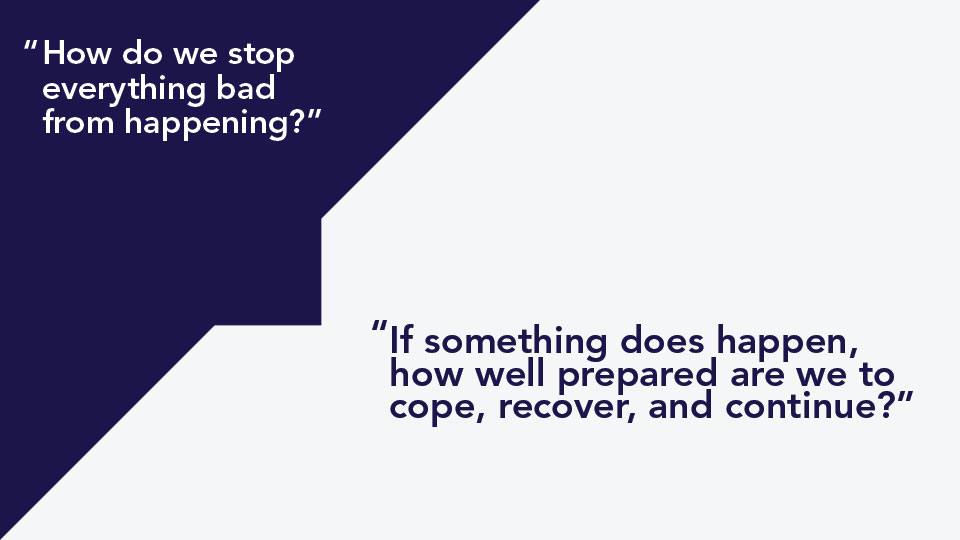
That mindset change is critical. It’s what turns cybersecurity from an IT concern into an operational capability.
And when data is classified and security is built around it, rather than bolted on afterwards, it becomes significantly harder for attackers to access or extract sensitive information. The business is then far better placed to adopt new technologies, automate processes, and move forward with confidence.
3) The third leg: AI readiness
(why “AI on messy data” is the new Wild West)
Now we reach the part many leaders are excited about: AI and automation. And without the other two legs, this is where instability shows fastest.
Businesses are increasingly looking to AI to improve efficiencies and reduce manual effort: summarising information, finding answers faster, drafting content, streamlining internal processes, supporting service delivery, improving reporting, and more.
But here’s the catch: AI doesn’t fix chaos. It magnifies it. If your data is unstructured, duplicated, inconsistently named, and accessible without clear rules, then AI can quickly become a fast lane to the wrong outcomes, or the wrong information in the wrong hands. AI without process and guardrails can take a business “back to the Wild West”.
And there’s another risk worth calling out here. Without a clear, governed approach, teams naturally turn to free or public AI tools to get things done. That can feel harmless, but it risks losing control of intellectual property and sensitive information, especially when data may be retained or reused beyond your organisation and control. Whilst this isn’t malicious behaviour, it’s a risk created by convenience and a lack of clear boundaries.

To adopt AI successfully, you need two things:
A) Organised, Trusted DataLakes
AI is only useful if it can analyse information you trust. That means having clear datasets, sensible structure, and ownership, so the system isn’t pulling from outdated, duplicated, or irrelevant sources.
If the data is messy, AI doesn’t fix that. It simply produces faster, more confident looking mistakes.
B) Clear Rules and Controls
You need clear boundaries around what AI is allowed to review, where it’s allowed to pull information from, and who is authorised to run an AI tool or agent, change how it behaves and receive its outputs.
This matters because the value of AI in a business often comes from giving it access to internal knowledge: processes, policies, project details, customer history, service info, and operational context. But “more access” isn’t automatically good. It has to be the right access, governed properly. Controls apply to people as well as the technology. Staff also need clarity on how to use AI tools without exposing intellectual property or sensitive data. Done well, AI becomes an accelerator for the business. Done badly, it becomes a risk multiplier.
Bringing it together:
What The tripod means for day-to-day operations
Here’s the simple truth:
- Without structure, you can’t control access and change.
- Without security, you can’t safely centralise and share data.
- Without both, your AI ambitions won’t be safe or effective.
This is why these three areas are intrinsically linked: your data store, your cyber security posture, and your AI readiness. That’s why leaders should care: it isn’t just “an IT project”. It’s operational health. It affects how quickly your business can adapt, how well it can scale, how reliably it can operate, and how confidently it can respond when the unexpected happens.
A practical starting point, without the major overhaul
If you’re reading this and thinking, “Right… but where do we even begin?”, here’s some sensible starting points:
- Identify where your core business data should live, (i.e. your “data lakes”), even if today it does not.
- Agree a simple classification model: what’s sensitive vs standard.
- Decide who genuinely needs access to what, and under what conditions.
- Set clear guardrails for sharing and changes (so data stays trustworthy over time)
- Only then expand AI/automation beyond experimentation
You don’t need to be a technical leader to make strong decisions about IT foundations. You just need a clear framework and the right questions. If you want a simple, jargon-free conversation about where your business is today, and what “good” could look like for your data, security, and AI readiness, that’s exactly the sort of groundwork we help business leaders with.
Because when the foundations are right, everything else becomes easier: safer operations, better visibility, smoother change, and a business that can grow without its systems holding it back.
FAQs business leaders ask about operational health, data, and AI
If you have to stop and think, or ask several people, that’s usually a sign of data sprawl. In a healthy setup, leaders and teams have a shared understanding of where core business information lives, what belongs there, and what does not. It does not mean everything is perfectly tidy, but it does mean data is intentional rather than accidental.
Cloud storage changes where data lives, not how risky it is. Without classification, everything tends to be treated the same, whether it is a draft document or sensitive client information. Classification gives you context. It tells your systems and your people what needs protection, what can be shared freely, and what requires extra care. That context is what enables sensible security and safe automation later.
In most cases, yes. And that is not automatically a problem. Duplication becomes a risk when there is no clarity about which system is the source of truth, who owns the data, and how it is governed. The goal is not to eliminate duplication entirely, but to understand it and control it so decisions are based on reliable information.
Classification removes hesitation. People spend less time wondering whether something can be shared, edited, or reused, and more time acting with confidence.
It also improves trust. Reports, dashboards, and AI outputs are more reliable when teams understand which data is authoritative and which is contextual. Over time, this reduces duplicated work and improves decision quality without adding extra process.
Start with decisions, not restructuring. Identify where your most important business data should live, agree a simple classification model (e.g. sensitive and not sensitive), and assign ownership for keeping that data accurate and controlled.
This does not require reorganising everything at once. It creates a baseline of clarity that future improvements can build on. Governance only becomes heavy when it tries to solve everything upfront instead of establishing sensible boundaries first.
You do not stop this through policy alone. People use public AI tools because they are fast, helpful, and frictionless. If internal systems are slow or unclear, staff will work around them.
The practical approach is threefold: clearly define what counts as sensitive data, provide an approved AI environment that staff are allowed to use, and put guardrails in place so accidental exposure is harder than doing the right thing. When people have clarity and a safe alternative, risky behaviour drops without heavy enforcement.
Poor structure increases exposure and slows response. When data is scattered and loosely controlled, attackers have more places to exploit and defenders have less visibility.
The bigger issue appears during incidents. Teams struggle to identify what data matters most, what is safe to restore, and what may already be compromised. This confusion extends recovery time and increases impact, even when technical controls like backups are in place.
A clearer view of where you stand
Few leaders will openly admit they do not have clear answers to the questions raised in this article. Growing businesses often inherit systems, processes, and habits over time, without ever stopping to examine how well they really work together. The value here is in being willing to surface the gaps, understand where things are unclear, and address them deliberately rather than letting them grow unnoticed.
If some of these questions have prompted reflection, our Data Sense Check can help you assess where you stand. It provides a practical way to identify potential blind spots, explore areas of risk, and build a clearer picture of how your data is managed across the organisation.