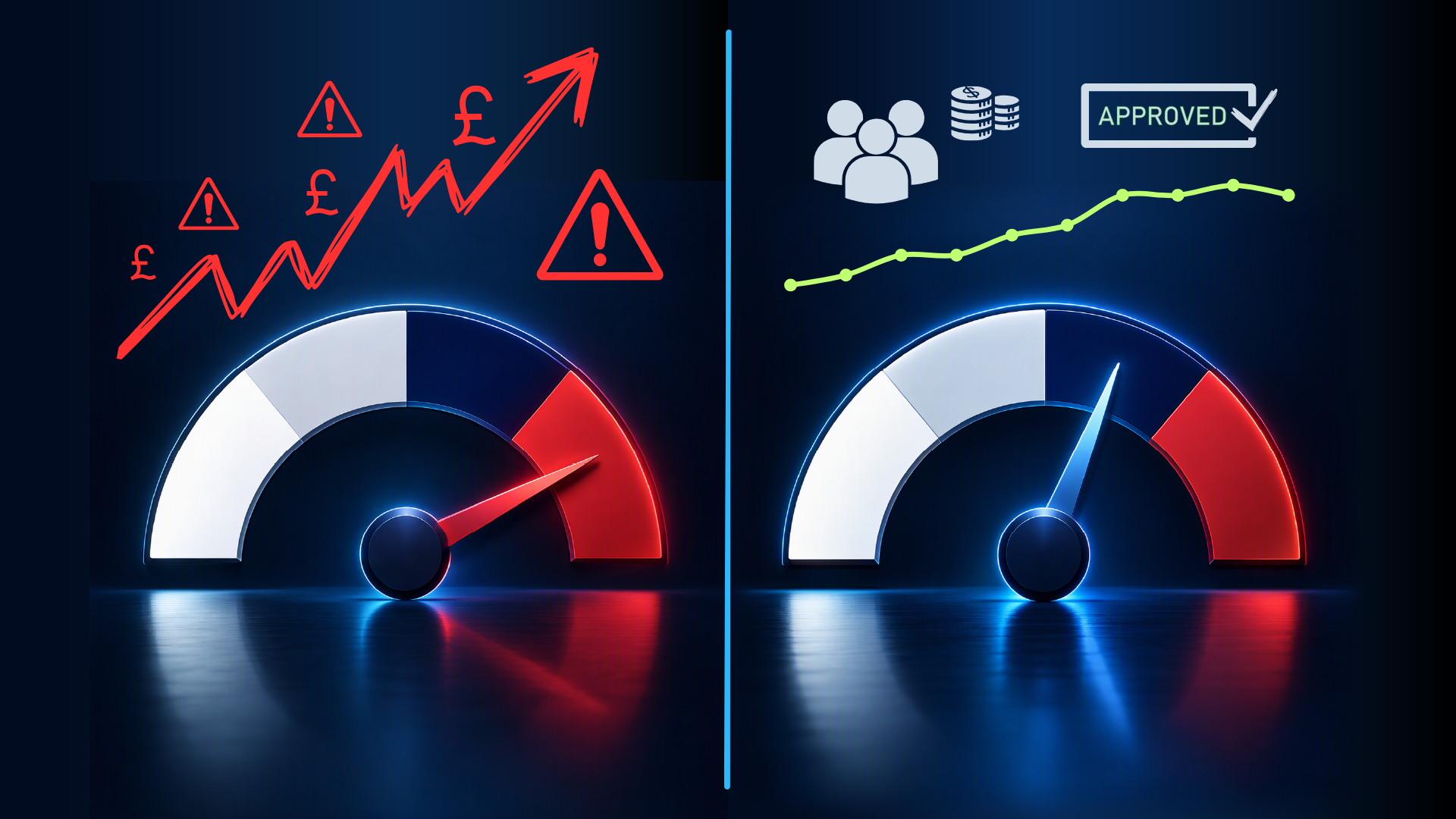

From unmanaged devices to data sprawl, how many of these challenges sound familiar?
Executive Summary (TL;DR)
Hybrid working gives staff the flexibility to work from almost anywhere, but it can also blur the lines around access, devices and data sharing. The real risk is often hidden in everyday shortcuts that feel harmless until something goes wrong. Before assuming your setup is secure, ask:
- Are personal mobiles, home laptops or local downloads part of how work gets done?
- Can you tell the difference between a genuine remote login screen and a risky one before you access the system?
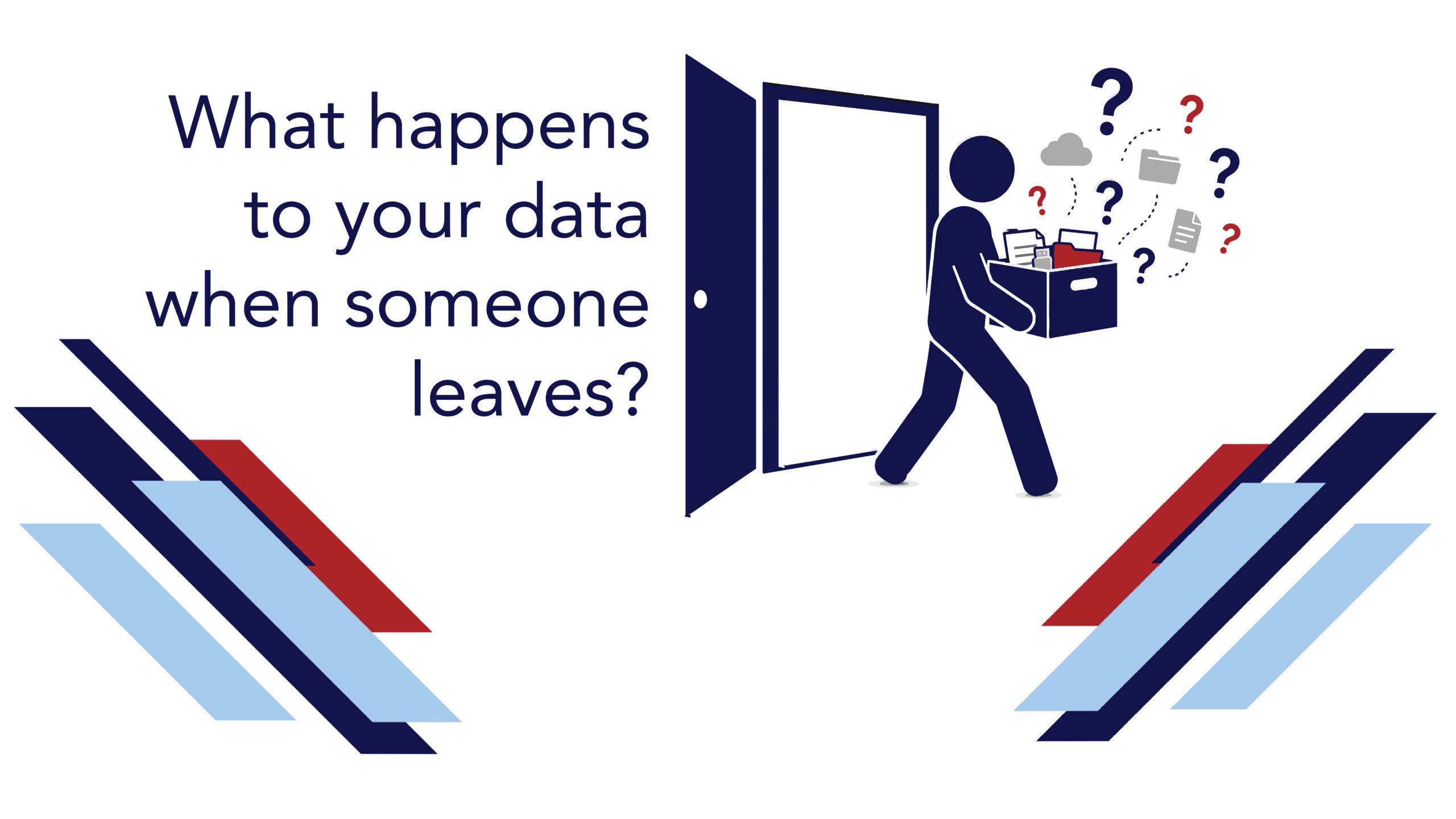
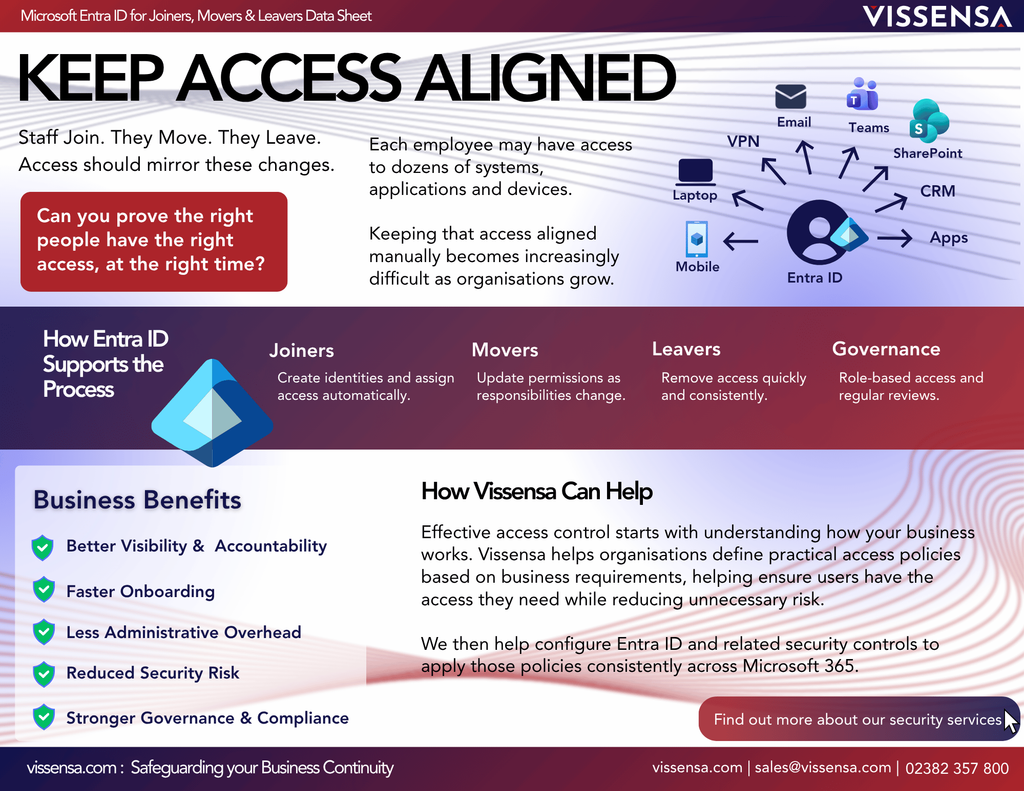
- What happens when someone joins, changes role or leaves?
- Could you evidence your controls clearly during an audit, tender, insurance review or client question?
If those answers are unclear, hybrid working may be carrying more risk than it appears. Secure hybrid working starts by making access, devices and data movement visible, then tightening the controls that matter most.
If everyone can already work remotely, what’s the problem?
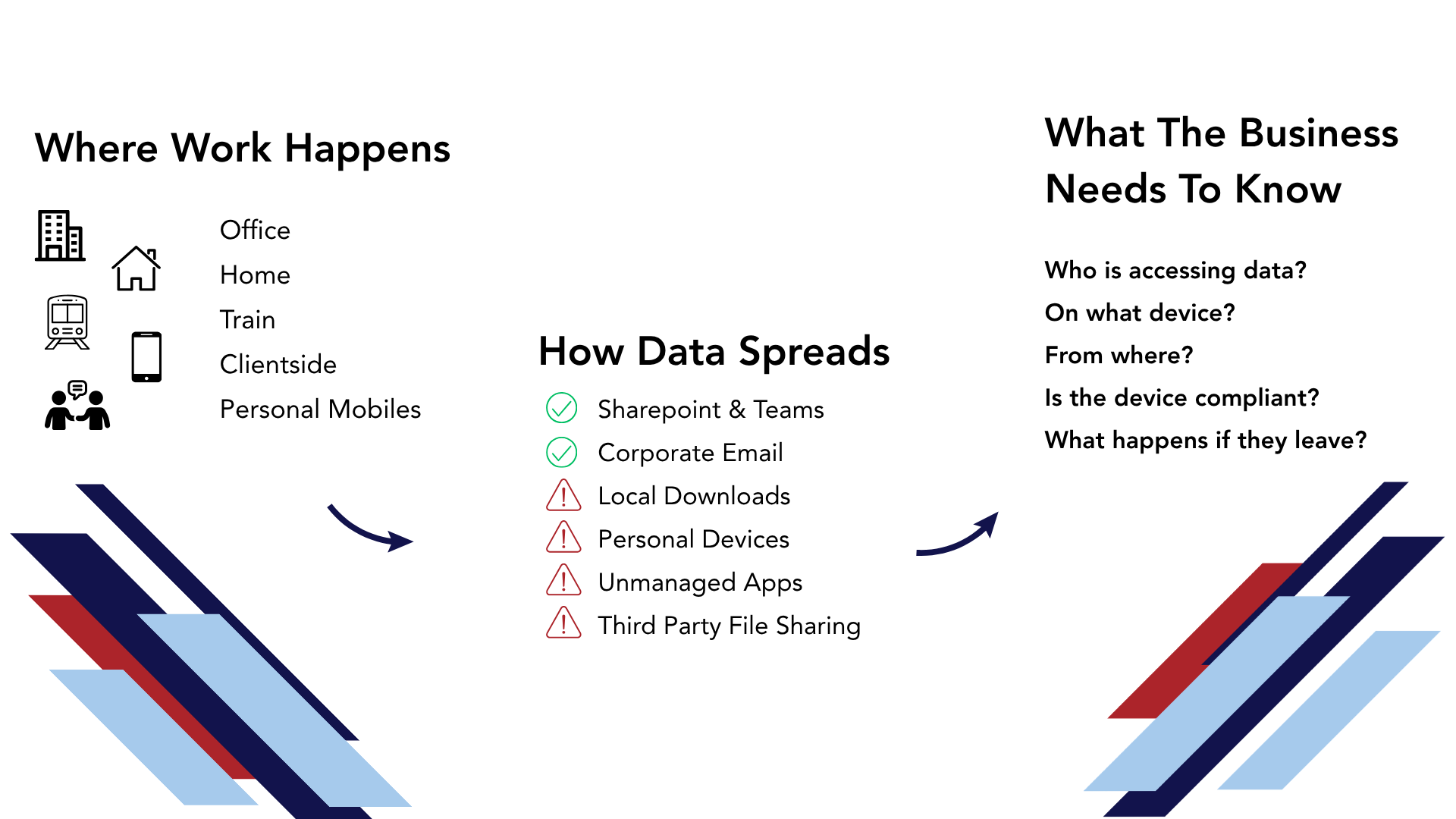
The problem is that working anywhere can lead to data ending up everywhere. Files are downloaded to personal laptops. Teams use their own phones to keep work moving and share information. Staff forward documents to personal email because it feels quicker. Managers often approve access inconsistently because a new starter needs to be productive today, and there is no joiner process to follow. Leavers keep access longer than anyone intended because the offboarding process depends on several busy people remembering every step.
Most of this happens because the business has moved faster than its controls. What started as a practical way to keep people productive gradually becomes a blur of devices, identities, permissions, apps and exceptions. By the time someone asks, ‘Do we know who can access what, from which device, and where that data now lives?’, the honest answer may be less comfortable than expected.
How can unchecked hybrid working setups be dangerous?
The short answer? Data exposure. The risk is not only a data breach, but downtime, ransomware exposure, GDPR concerns, failed audits, regulatory pressure, reputation damage, and a loss of trust. Even when nothing has gone wrong yet, the business may be carrying hidden risk because no one has full visibility of devices, identities and data movement.
How do cracks emerge that expose data?
Secure hybrid working rarely unravels in one dramatic moment. And with day-to-day running of a business, the warning signs can be easy to miss:
- Cyber Essentials or ISO certification lapses
- Rapid remote workforce growth
- Access complaints
- Ad hoc new starter access
- Management not realising that a former employee still has access to corporate data
- Converting a leaver’s emails to a shared mailbox
These are the moments when leadership teams accidentally increase the gap between policy and reality. The policy may say staff should only use approved devices, but people are using personal mobiles which have not been checked for compliance. The policy may say access is reviewed regularly, but the review is a spreadsheet that depends on manual updates. The policy may say confidential files must stay in approved systems, but people are saving copies locally.
hidden security risks of hybrid working
The surface need
The hidden risk
People accessing the corporate environment from anywhere.
A visibility problem around devices, locations and possible unmanaged access.
Teams need to collaborate easily.
A data protection problem if file access is unmanaged and shared/move into unofficial channels.
Audits and tenders need evidence.
A governance problem if controls exist only as policy statements.
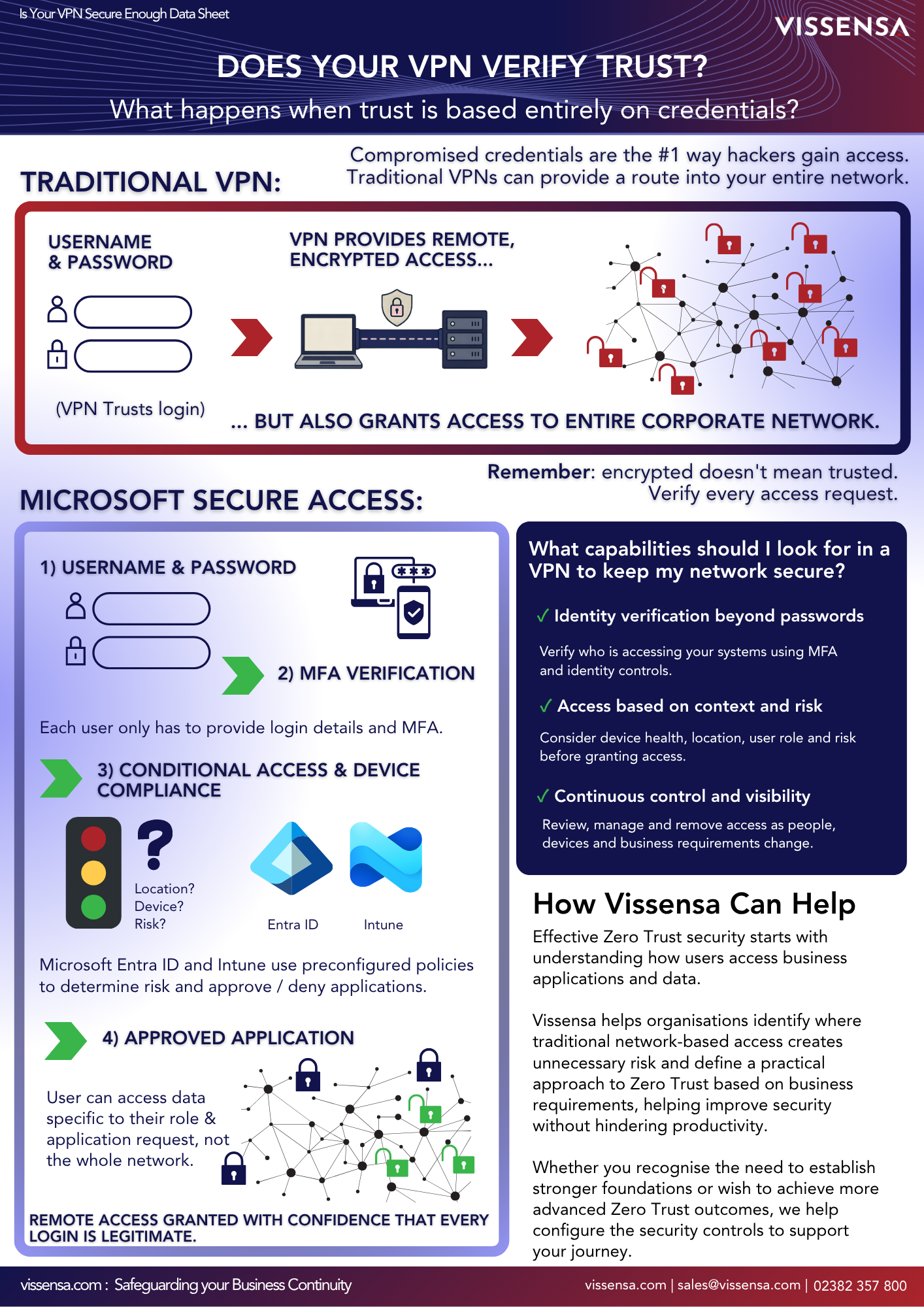
The business still relies on VPN.
A remote access problem if trust is assumed on network location alone.
Secure hybrid working requires true visibility
The core question? how do you let people work from anywhere without sacrificing security and possibly losing control of company data? To answer it properly, the business needs to know:
- who the users are,
- what devices they are using,
- which apps and files they have authority to access,
- whether those devices are compliant,
- and what happens when someone joins, moves roles or leaves.
That visibility matters because hybrid working stretches the old perimeter. Many businesses used to think about security in terms of the office network. If someone was inside the building or connected remotely through a VPN, they were treated as trusted. That model weakens when people work across home routers, public Wi-Fi, personal devices, cloud apps and mobile access.
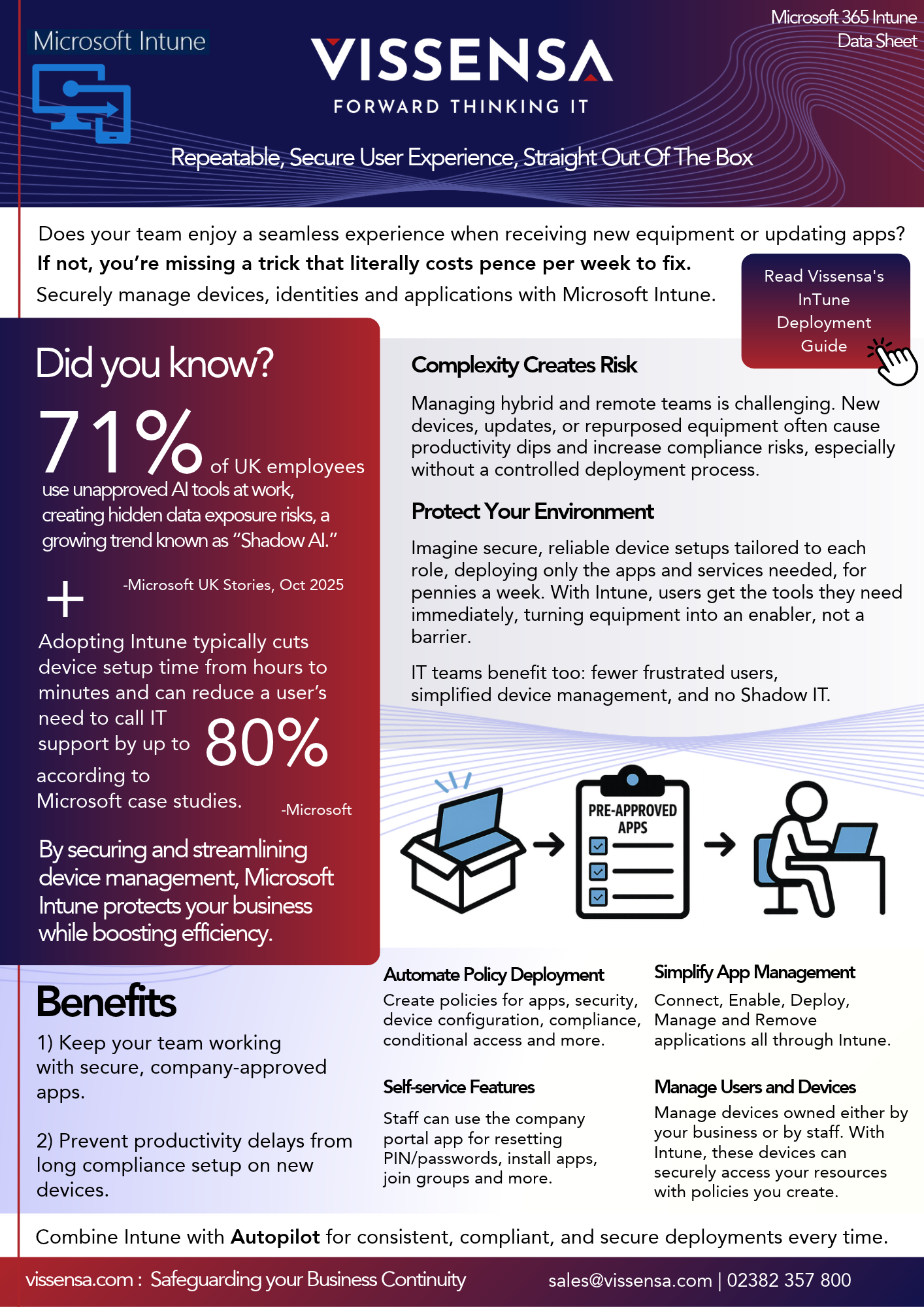
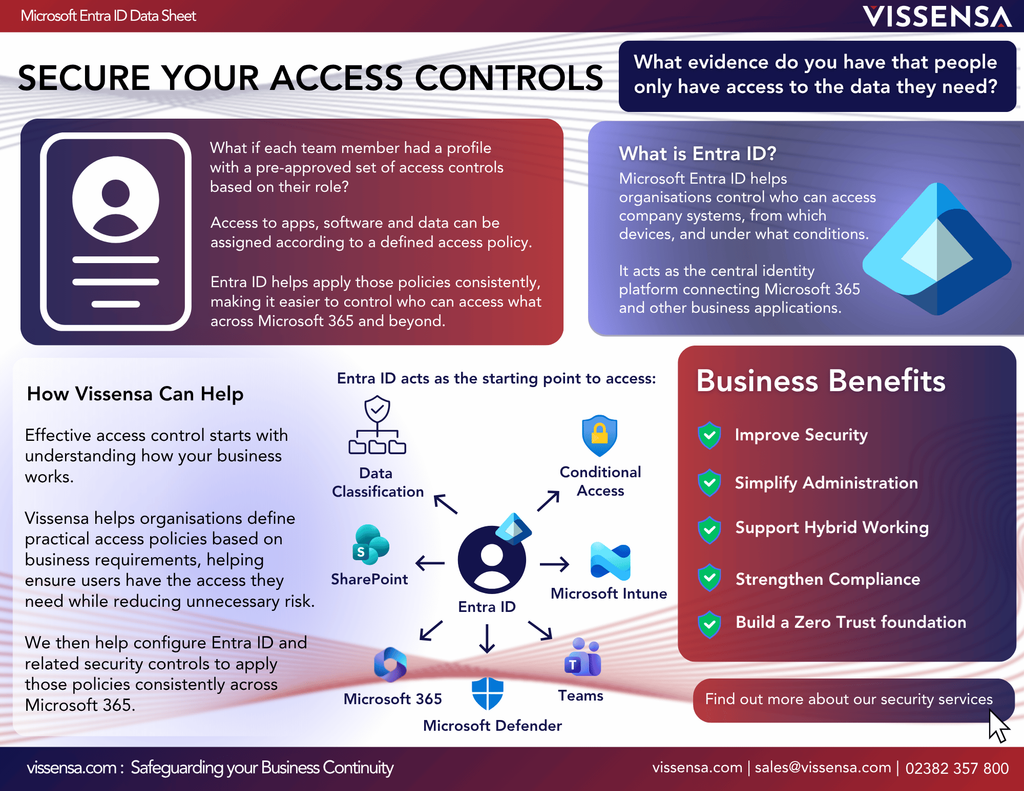
This is where multi-factor authorisation (MFA), single sign-on (SSO), Conditional Access and device management become relevant. Not every user needs to become a technical specialist. But they must understand why basic access is no longer enough. The decision should move from ‘Can this person log in?’ to ‘Should this person access this data, from this device, in this context, right now?’
The Responsibility of Secure hybrid working belongs to the whole business
Secure remote and hybrid working may sound like a technical concern, but it supports responsibilities across the whole business. While every department is working towards the same broader goals, its role in handling and protecting data will vary according to its priorities and day-to-day responsibilities.
If the attitude across the business remains that secure hybrid working is just “an IT issue”, it will never fully be achieved. IT may enable secure hybrid working, but understanding and buy-in from every department is fundamental for its success.
FAQs business leaders ask about Secure Hybrid Working
Just because you’ve not encountered the issue does not prove the business is in control. Many hybrid working risks stay hidden until there is an audit, lost device, leaver issue, client question or incident.
Smaller businesses still hold valuable client, financial, employee and operational information. They may also have fewer people available to spot and respond to problems.
Poorly designed controls frustrate people. Well-designed controls reduce friction by making access clearer, more consistent and less dependent on manual approvals.
Owning the tools and configuring them well are different things. Many organisations already have useful security features available, but those features need to be aligned to how the business works.
Productivity can hide risk if people are relying on unofficial shortcuts. The question is whether the business has a secure, repeatable process, rather than workarounds that happen to be convenient.
IT may implement the controls, but the risk belongs to the business. HR, Operations, Compliance, Communications and Leadership all feel the impact when access, data and devices are poorly managed.
What businesses should ask now
If hybrid working is part of normal operations, leaders should ask practical questions.
Are employees using personal devices to access company data?
Are teams using unofficial channels to collaborate?
Are company files stored locally?
Are managers sharing accounts or approving access outside a defined process?
Are former employees fully removed from every relevant system?
The answers do not have to lead immediately to a major transformation project.
A sensible starting point is to map the risk: people, devices, apps, access, data and evidence.
Once the business understands where control is weak, it can decide what needs tightening first.
Where the solution starts
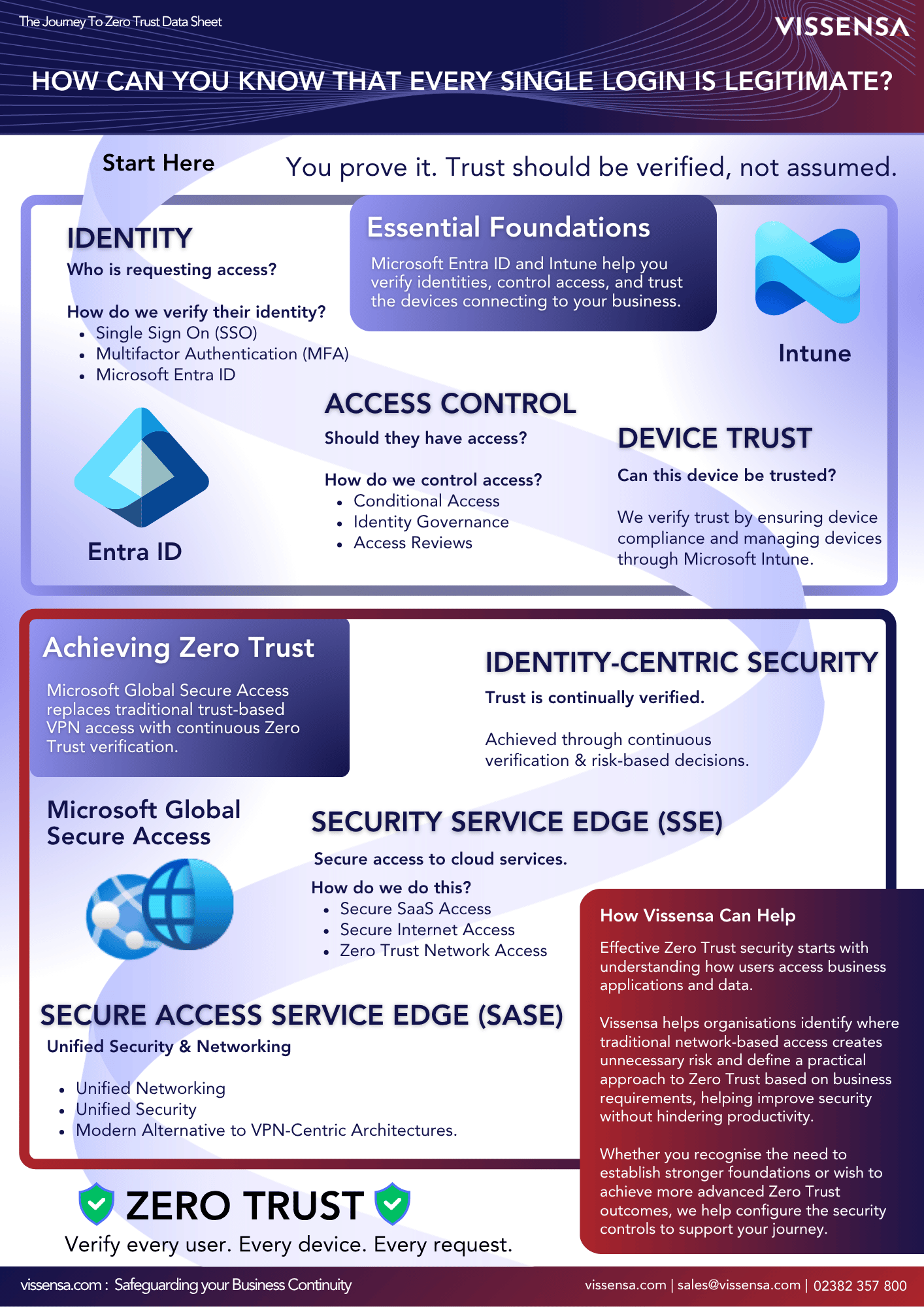
Organisations typically address these risks through stronger identity controls, device management, governance controls and secure remote access approaches.
A stronger secure hybrid working model starts with identity and access. MFA and single sign-on help reduce weak sign-in practices. Conditional Access helps apply rules based on user, device, location and risk. Device management helps the business understand whether laptops and mobiles meet minimum standards before they are trusted. Zero Trust thinking helps move the organisation away from assuming access is safe because someone has a password or uses a familiar network.
For businesses ready to go further, Security Service Edge and broader SASE approaches can help modernise secure access beyond traditional VPN thinking. But the technology should follow the business problem. The first step is recognising where flexibility has created blind spots, and where those blind spots could affect productivity, compliance, cyber resilience and trust.
Creating a safer way to work
Secure hybrid working is about protecting freedom. Staff should be able to work productively from wherever they need to be, but the business should still know where its data is, who can access it and whether that access is appropriate.
If your organisation has grown, hired remotely, adopted more cloud tools, tolerated personal devices, passed audits through manual effort or relied on VPN access for years, now is a good time to review whether your controls still match the way people actually work.
Does your business currently support hybrid working whilst maintaining visibility of devices and access decisions that keep customers, employees and operations protected?