
What business leaders need to know to avoid unexpected charges on advanced Copilot use.
From 1 December 2026, some advanced Microsoft Copilot services will begin generating consumption charges beyond the cost of the user licence. Organisations using agentic AI will need to understand which activities consume credits, who controls spending and whether the expected efficiency still justifies the cost.
N.B. This change applies to users with a Microsoft 365 Copilot Business license – the affected services are only available if you have chosen this license. These charges do not apply to the free version currently available with other licenses.
TL;DR
- Microsoft 365 Copilot Business is moving from a licence-only model towards licence plus consumption for certain advanced AI services.
- Basic Copilot Chat use should not be the main source of additional consumption charges under the change described here.
- Eligible subscriptions are expected to include a default monthly allowance of 4,000 Copilot Credits per user, with Microsoft indicating an approximate value of £30.
- Spending limits and related Azure resources need active oversight. Setting the limit to zero can prevent extra consumption, but chargeable AI functions will then stop working.
- Leaders should decide which AI workloads are valuable enough to fund, who may use them and who monitors consumption, or look for guidance if they are unsure.
Don’t worry, not every Copilot interaction will suddenly produce an extra bill. The change is aimed at more advanced services that do work on a user’s behalf, rather than simply responding to a prompt. For business leaders, the important question is where your organisation is using AI to carry out tasks, how much that activity consumes, and who has authority to approve the resulting cost, and how to manage that consumption across your teams.
Whether you’re already making use of Copilot’s additional features, or are planning to start in the next 12 months, this blog provides useful pointers on how to prepare.
What is actually changing?
Until now, many organisations have understood Copilot primarily as a per-user licence: choose who needs access, buy the licences and budget accordingly. Usage-Based Billing adds another layer. Customers will continue paying for licences, but certain advanced AI activities may also consume credits and generate monthly charges.
The affected services include Copilot Cowork, Work IQ APIs, Copilot in SharePoint, GitHub Copilot Harness, Code within the Frontier programme and Autopilot, formerly Scout.
HOW CAN MY ORGANISATION BENEFIT FROM THESE ADDITIONAL COPILOT FEATURES?
This table is useful as a quick orientation point, especially for anyone new to these services, but you do not need to understand every product name in detail in order to make informed decisions about your usage. A good business-oriented IT provider can guide you on what features your organisation may benefit from to help you make that informed decision.
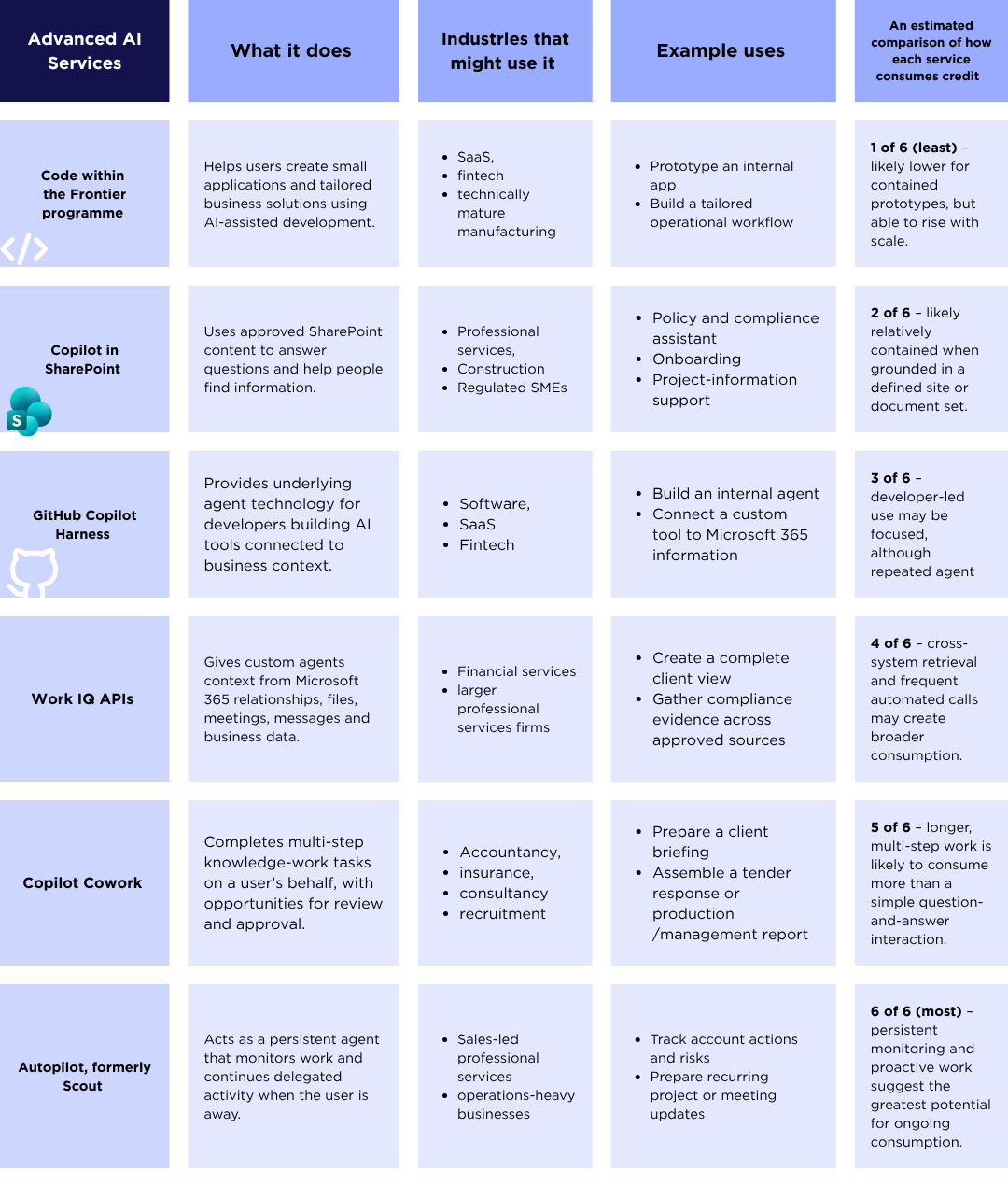
One important distinction to understand is between AI that answers a question and AI that performs a workload. When an AI service searches, analyses, creates or acts across systems on a user’s behalf, such as the services listed above, consumption becomes a commercial issue that requires management.
Why You Still Need Your Brain for Effective AI Management
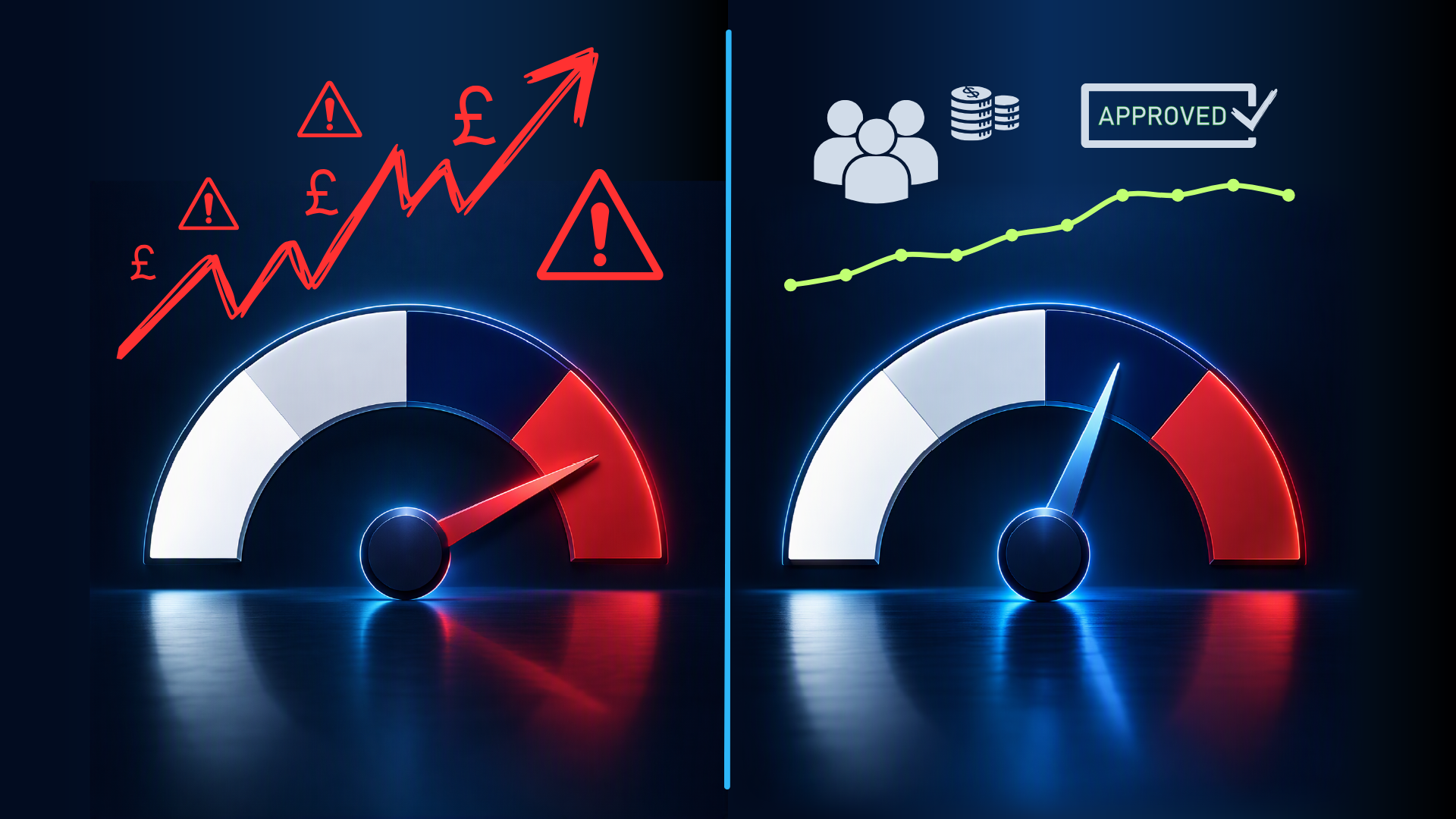
A new consumption model changes how the value of Agentic AI use should be assessed. An agent that removes hours of repetitive work, increases capacity or prevents delay may justify its running cost. An agent performing low-value tasks at scale may not.
The risk lies in allowing consumption to grow without ownership. The reality that some of our clients have already started spending more than £10,000 each month on heavily deployed agentic AI shows why this needs senior attention.
Leaders should treat AI consumption in the same way they would any other operational resource. Set a purpose, assign a budget, define accountability and review the return. The goal is considered and controlled use, not blanket restriction.
Who takes responsibility for Advanced AI spending and access?
Qualifying Copilot Business purchases will automatically create supporting Azure resources, including a plan, subscription, resource group and spending policy. Business leaders do not need to manage those components personally. They do need confidence that somebody competent owns them and that commercial decisions are translated into technical controls. Any good MSP should be able to guide you to what’s the best solution for you, as well as assist with carrying out the administration of approving credits.
This ownership should be clear across finance, operations and IT. Finance needs visibility of potential variable costs. Operational leaders need to identify which workloads deliver measurable value. Your IT team or your Microsoft partner needs to apply the right limits, permissions and monitoring. Leaving the decision entirely with one team creates gaps: technology may be available without a business case, or a useful service may be blocked because nobody planned for its cost.
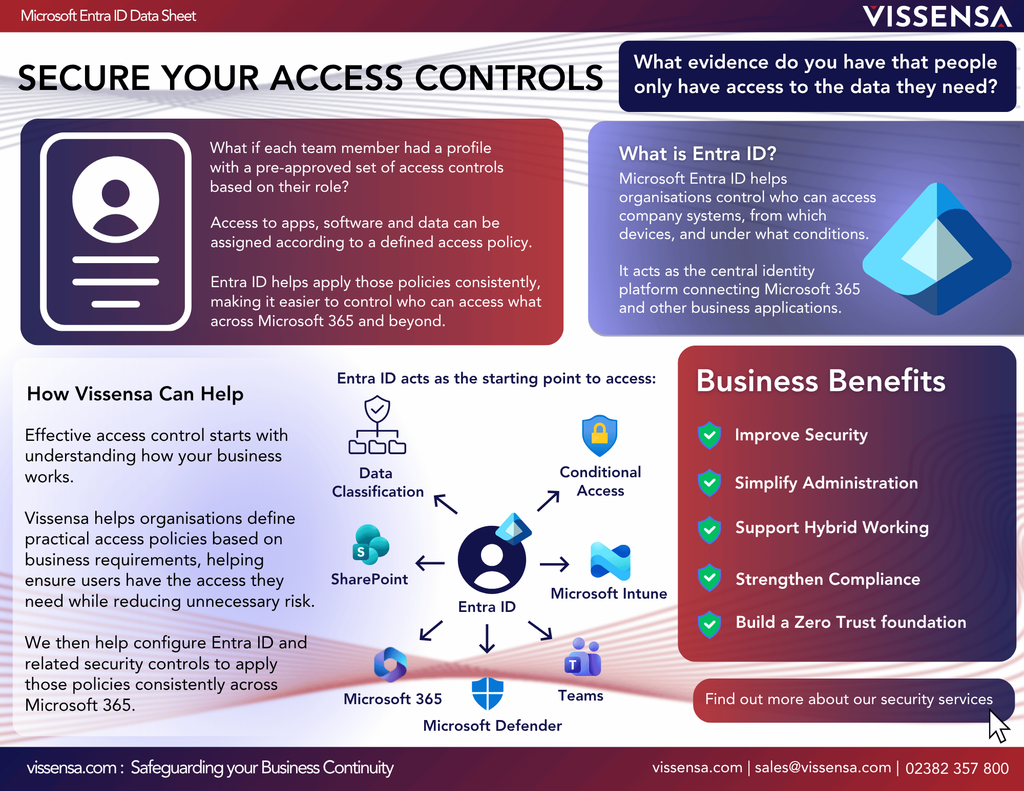
Is your Microsoft licence provider guiding you through this change? They should be. A good provider should help you find the right path, using the right features and handling consumption of these resources in the most efficient way to achieve your desired outcomes. This is where Vissensa’s business-first approach comes into its own. We help organisations understand how technology fits their requirements, so they can make informed decisions with confidence.
Plan AI workloads as carefully as human workloads
Business leaders are wise to consider AI agents as digital employees and plan their AI budget accordingly. A human role has defined responsibilities, access, supervision and a cost. An AI workload needs the same discipline.
Start with the job to be done. Estimate how often the agent will run, what information it will use, what output it creates and what happens if it stops midway through a project. Then compare the likely consumption cost with the time, capacity or service improvement gained. The cheapest option is not always the best; nor is automating every available task.
The expected initial £30 cost for an allowance of 4,000 credits per eligible user per month also makes prioritisation important. If a team uses its allocation on low-value activity, a more important workload may be delayed or require further approval. Credits should therefore follow business priorities rather than individual enthusiasm.
three choices for controlling consumption
Governance must come before scale
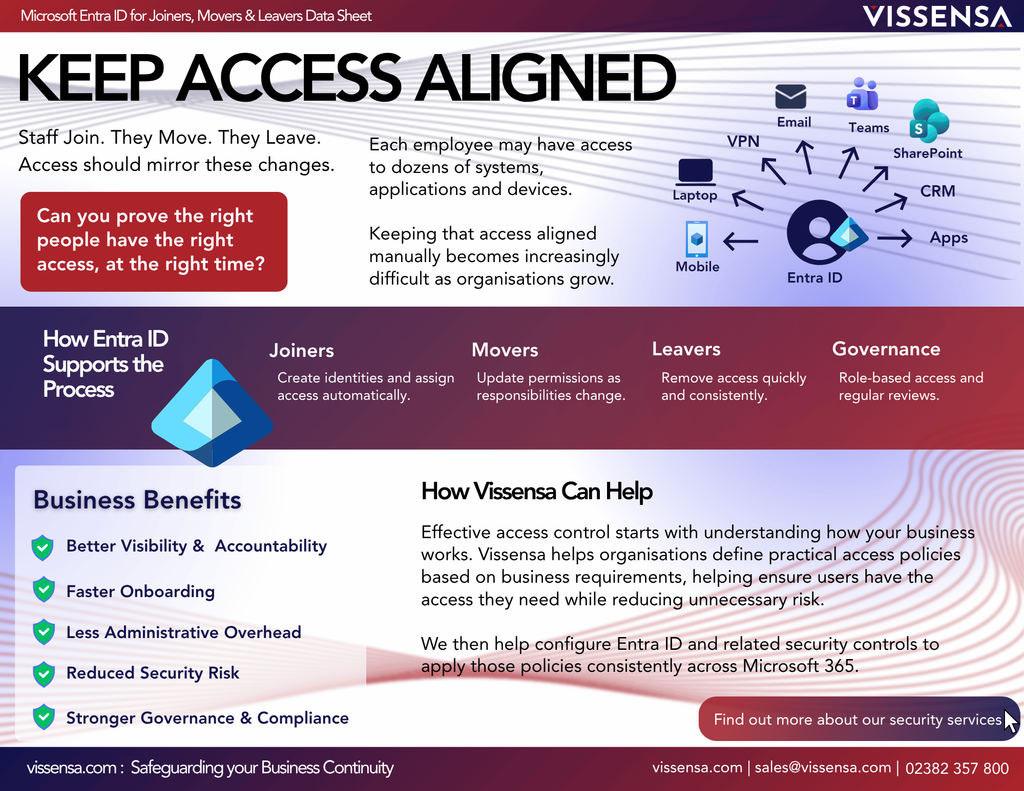
Cost is only one part of responsible AI use. Before deploying more agents, establish who can create or authorise them, which systems and data they can access, what tasks they may perform and who checks the results. Data classification matters because an agent can only be governed properly when the organisation understands the sensitivity of the information in its reach.
This is a leadership issue because the controls should reflect business policy. Technical teams can configure permissions and spending policies, but they should not have to guess the organisation’s appetite for risk, acceptable use or expected return.
A good indicator of whether your organisation is in a healthy place to safely adopt more advanced AI services is to be able to answer yes to the following question :
- Do you know where your most sensitive business, financial, customer and employee data is stored, and are only the appropriate people authorised to access it?
If the answer is not a confident yes, we’ve got a blog that addresses this issue.
What to do before december 1st
- Identify which advanced Copilot services and AI agents are already in use or planned.
- Separate basic chat use from activities that perform work and consume credits.
- Confirm who owns the Azure spending policy and who can approve additional consumption.
- Set limits by user, team or workload according to business value.
- Check how charges will appear through your Microsoft provider.
- Review the data, systems and permissions available to each agent.
- Measure whether each use case saves enough time, capacity or cost to justify continued consumption.
FAQs on Copilot's advanced AI services
No. The change described here concerns certain advanced services that consume Copilot Credits. Basic Copilot Chat use should not be treated as equivalent to an agent carrying out work across systems. Your actual exposure depends on the services and activities in use.
Yes. Customers can set spending limits to zero. However, the advanced functions that require paid consumption will then stop working. A controlled limit may be more appropriate where there is a valuable use case.
That depends on the workload. The number alone says little without knowing which services consume credits, how often they run and what business outcome they produce. Monitor real use before assuming the allowance is either generous or restrictive.
Not automatically. Revisit the business case, confirm governance and model the likely consumption cost. Proceed where the value is clear and the controls are in place.
The main cost factors are licence type, user numbers, the volume of prompts or agent activity, the complexity of each task, how much business data the tool needs to retrieve, and whether it connects to other systems or development environments.
Costs can also rise when tools run repeatedly in the background, generate code or content at scale, or use larger models for more complex work. This is why AI developer tools should be planned around specific workloads rather than treated as a general-purpose extra feature.
Turn the change into a better AI decision
Usage-Based Billing makes the cost of advanced AI more visible. That visibility can improve decision-making if leaders use it to connect consumption with outcomes. Before the rollout, make sure you know what is running, who owns it and what value it is expected to deliver.
If you need help reviewing your Copilot usage, Azure spending controls or AI governance, Vissensa can help you turn the technical settings into a practical plan for your business. And if you’re planning for Agentic AI use in the near future, its really important to get data classification under control before letting an AI agent at your data.
Explore Data Classification